Prevention and daily care play an important role in understanding how pressure sores may develop and how small changes in comfort or skin appearance can be noticed during everyday routines. Families often ask what simple steps can help reduce unnecessary pressure, especially when someone spends long periods sitting or resting. Prevention and daily care are about awareness, comfort and calm involvement, not clinical assessment or treatment. This article looks at everyday actions that can support prevention and daily care in a reassuring and realistic way.
Building a Gentle Daily Routine
Creating a predictable routine helps families spot subtle differences more easily. Regular mealtimes, resting periods, time outdoors and light activity help form a rhythm that makes changes in comfort or posture easier to notice. Visitors often pick up on how someone settles after certain parts of the day, such as after lunch or following a short walk around the room.
Natural light is especially useful. Soft daylight makes it easier to see colour changes and identify whether someone seems more relaxed in one position than another. These observations are simply everyday awareness rather than any type of medical evaluation. Families often feel more confident when they know what to look for and how to share small details with staff.
If you want to learn more about comfort and ageing, Age UK offers general guidance on wellbeing in later life:
https://www.ageuk.org.uk/information-advice/health-wellbeing/
Small Comfort Checks
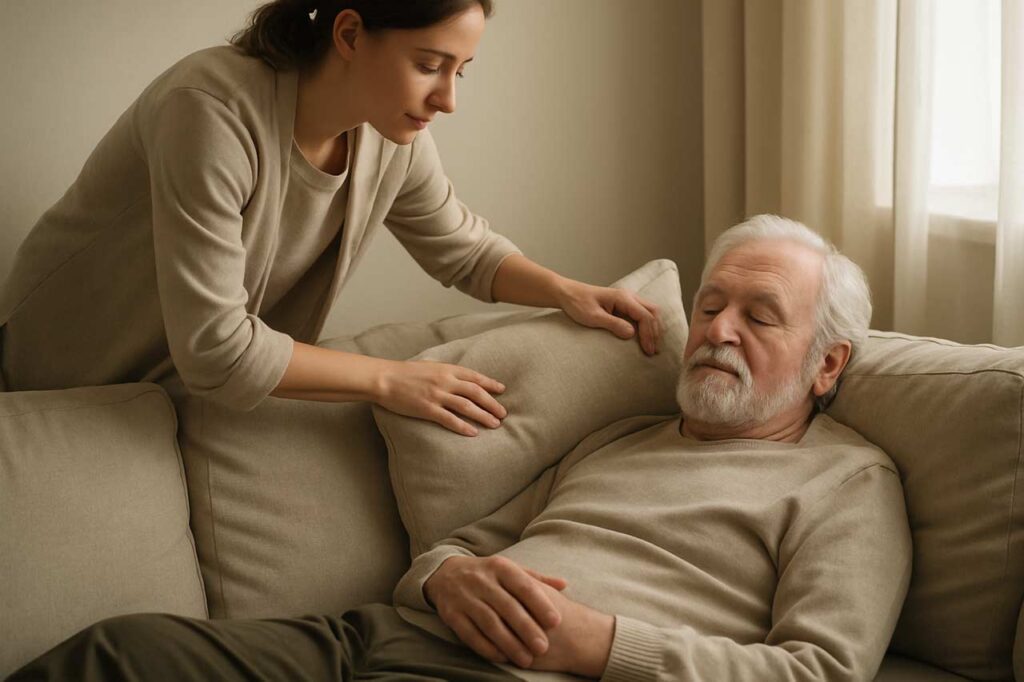
Little adjustments can make a noticeable difference. Checking that blankets are smooth, ensuring cushions are placed correctly under the arms or legs and removing any folds from clothing can support overall comfort. These small actions also help you observe whether someone reacts differently to certain movements or positions.
Some visitors notice that gentle stretching or light repositioning, carried out with staff guidance, helps the person relax more fully. Even something as simple as adjusting the height of the chair or footrest can reduce unnecessary strain. Prevention and daily care rely on these ongoing, thoughtful observations.

Awareness of Early Skin Changes
Early differences in colour, temperature, texture or firmness may appear before any clear discomfort is expressed. Family members who visit regularly often recognise these small signs sooner than they expect. Prevention and daily care encourage relatives to stay aware of these changes and share them with care staff as part of usual communication.
External factors like bedding, seams in clothing, a cushion that has flattened or a chair that slopes to one side can all influence how pressure builds. Looking at the surroundings as well as the individual helps provide a clearer picture. The NHS offers general information on skin health and ageing, which some families find helpful:
https://www.nhs.uk/conditions/ageing-skin/
This external reference from the NHS is suitable because it provides broad information on wellbeing and skin changes without entering clinical guidance related to pressure injuries.
Encouraging Natural Movement
Movement is one of the most reliable ways to reduce strain. A slight shift in posture, a gentle lean supported by a cushion or elevating the feet can all make resting periods more comfortable. Encouraging simple movements can help you understand which positions are easiest and which may need adjusting.
Families sometimes notice that someone settles more naturally in a certain position or becomes restless if left in the same posture for too long. These small hints can reveal what supports long-term comfort.
Working Together With Staff
Staff members observe routines across full days and nights, while relatives see detailed changes during visits. Bringing these perspectives together strengthens prevention and daily care. Even a small comment, such as noticing a new preference for a particular chair or seeing that someone leans more to one side than usual, can be helpful.
Sharing observations does not replace any professional judgement. It simply allows staff to build a fuller understanding of comfort patterns and adjust routines accordingly if needed.

Creating a Soothing Environment
Comfort is influenced by more than physical positioning. A calm environment helps someone relax more deeply during resting periods. Soft lighting, a warm blanket, familiar conversation or quiet background sounds can be reassuring. These small atmospheric changes support relaxation and reduce tension.
Families often bring something familiar, such as a favourite book or gentle music, which can help someone unwind and settle more comfortably.
Conclusion
Prevention and daily care rely on gentle routines, simple comfort checks and shared awareness. By noticing small changes in posture, reaction or overall relaxation, families can support someone through calm and attentive involvement. These everyday contributions help create a comfortable, predictable environment. Prevention and daily care allow relatives to feel connected and confident in the support they provide.