Safe care routines for pressure sores are built from small, gentle actions that fit around each person’s daily life.
Safe care routines support the skin by reducing unnecessary pressure and maintaining comfort. This page outlines simple routines that families and carers can follow as part of daily support.
Daily care routines do not need to be complex. Gentle actions performed regularly help protect the skin and maintain comfort through the day and night.
Simple Safe Care Routines That Support Skin Health
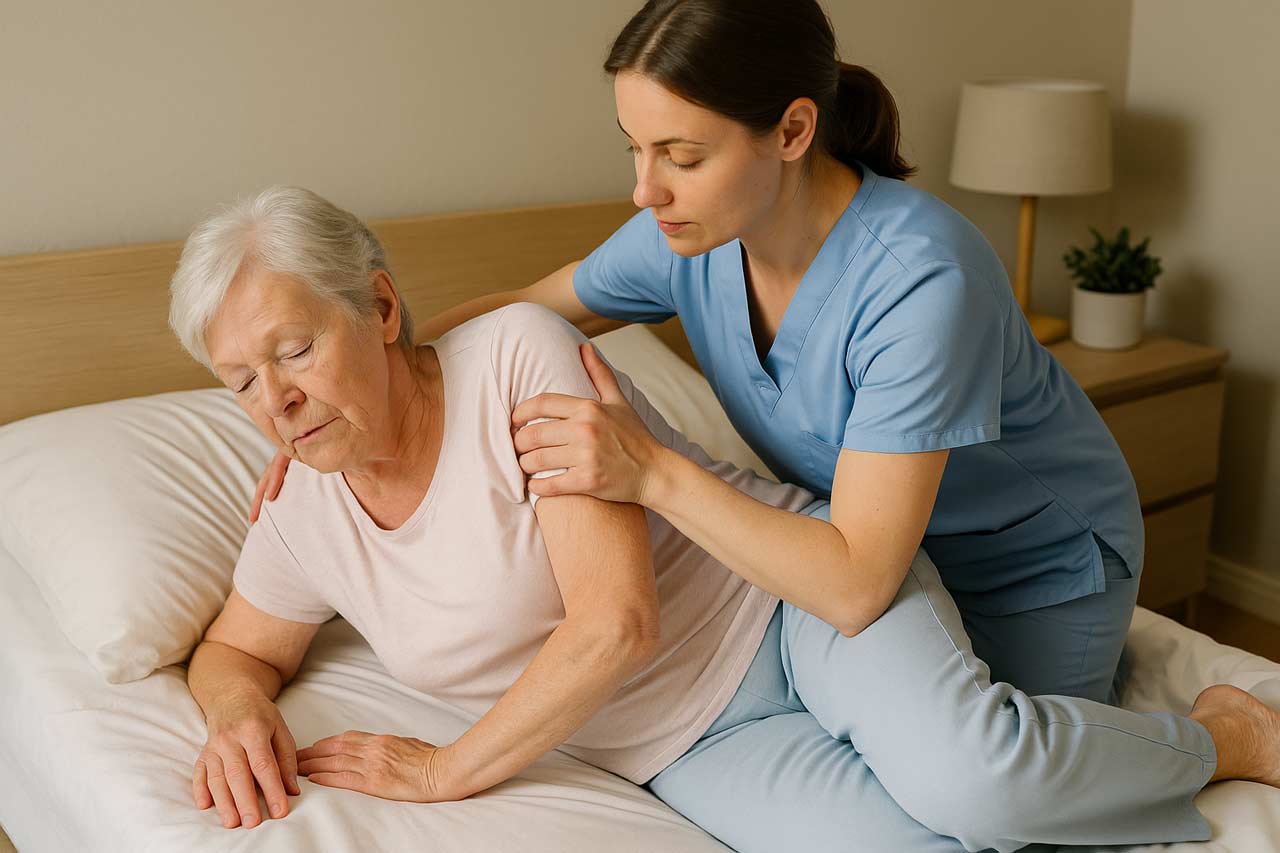
Safe care routines involve small steps that help the skin recover from periods of pressure. These steps can become comfortable familiar habits that fit naturally into daily life. They may include helping the person change positions, checking for early skin changes, adjusting cushions, or smoothing bedding.
Care routines also play a role in supporting overall wellbeing. They provide natural opportunities for observation and help maintain comfort. When combined with steady prevention efforts, they help reduce the risks associated with long periods of resting or sitting.
Gentle handling is important in all routines. Movements should avoid pulling or dragging the skin, as this may place extra strain on sensitive areas. Supportive routines also include ensuring the person is positioned comfortably and feels secure during adjustments.
Families can tailor routines to suit individual needs. What works well for one person may not be the same for another. Over time, carers often notice which routines support comfort best.
Please Share:
Whats Included
This guide outlines gentle routines that support skin health, including repositioning, checking for early signs, and creating a comfortable resting environment.
What To Expect When Following Care Routines
Safe care routines build consistency and help the skin stay protected across the day. These routines ensure that pressure is relieved regularly and comfort is maintained.
Examples of Safe Care Routines
-
Gentle repositioning
-
Supporting comfortable seating
-
Smoothing bedding
-
Checking pressure points
Comfort Habits That Help
-
Adjusting cushions
-
Supporting the lower back
-
Ensuring upright seating for meals
-
Checking blankets are not too tight
Observation Tips
-
Look for small changes
-
Ask about comfort
-
Notice pressure patterns
-
Adjust routines as needed
As these safe care routines for pressure sores become more familiar, they can offer steady support without feeling overwhelming.
Please Share:
F.A.Q.s
These questions explain how simple routines help protect the skin.
Are care routines difficult to follow?
No. Most routines are simple and fit naturally into daily life.
How do routines help prevent pressure sores?
Routines relieve pressure, support comfort, and help spot early signs.
Do routines need to be done at set times?
Routines work well when they follow natural daily patterns, such as morning and evening checks.
Can routines be personalised?
Yes. Routines can be adapted to suit individual comfort and mobility.
For more guidance, explore the rest of our information pages.
Contact Us.
If you need guidance or want to learn more about pressure sore risks and early signs, we are here to help. Our team can provide information for families seeking clearer understanding or support.
Email Us for General Imformation:
For Compensation and Legal Advice Call:
0800 214216
Legal Office:
The Alder Suite, Monmouth House, Mamhilad Park Estate, Mamhilad. Pontypool. Torfaen. NP4 0HZ